Research

AGN Disks & Tidal DisruptionsDense stellar environments — the accretion disks of active galactic nuclei (AGN) and the cores of star clusters — are crowded enough that stars and black holes routinely capture, pair, and destroy one another. I study these dynamics and the transients they produce: how objects are captured into AGN disks, how binaries form there, and how stars are tidally disrupted by both supermassive and stellar-mass black holes — turning AGN variability and tidal-disruption flares into probes of the embedded populations and the central black hole.10 papers Massive Black Holes & GWsMassive black holes shape galactic nuclei, and dynamical interactions in dense systems are a key channel for assembling the compact-object binaries that gravitational-wave detectors observe. Using high-precision N-body and scattering simulations, I study how single and binary supermassive black holes drive stellar mergers, tidal disruptions, and hypervelocity ejections, and predict the rates, eccentricities, spins, and sky distribution of dynamically-formed black-hole and neutron-star mergers — including evidence that our own Galactic-centre black hole grew through a past merger.8 papers Planets in Star ClustersMost planetary systems are born in clustered environments where encounters with passing stars are common. With high-precision few-body simulations I study how flybys reshape planetary architectures — forming hot Jupiters, ejecting free-floating and binary planets, and swapping giant planets between stars — connecting cluster dynamics to the diversity of observed exoplanets.6 papers GRBs & TransientsThe deaths of massive stars and the mergers of compact objects launch relativistic jets and engine-powered transients. I model their central engines (including magnetars) and multiwavelength afterglows, and bring that modelling to observational teams chasing the universe's fastest transients — gamma-ray bursts, fast X-ray transients, fast radio bursts, dirty fireballs, and engine-driven supernovae — connecting theory to real data from facilities such as the Einstein Probe, FAST, Chandra, and the VLA.8 papers Software & MethodsMuch of my research is enabled by open-source software I develop and release. These tools — a few-body gravity integrator and a gamma-ray-burst afterglow framework — emphasise accuracy and performance so the community can reproduce and build on my results.2 papers

All 34 papers, grouped by theme below. Full citation list & BibTeX on NASA ADS.

Dynamics & Tidal Disruptions in AGN Disks and Star Clusters10 papers

Dense stellar environments — the accretion disks of active galactic nuclei (AGN) and the cores of star clusters — are crowded enough that stars and black holes routinely capture, pair, and destroy one another. I study these dynamics and the transients they produce: how objects are captured into AGN disks, how binaries form there, and how stars are tidally disrupted by both supermassive and stellar-mass black holes — turning AGN variability and tidal-disruption flares into probes of the embedded populations and the central black hole.

Tidal disruption events from three-body scatterings and eccentricity pumping
2024 · MNRASCo-author

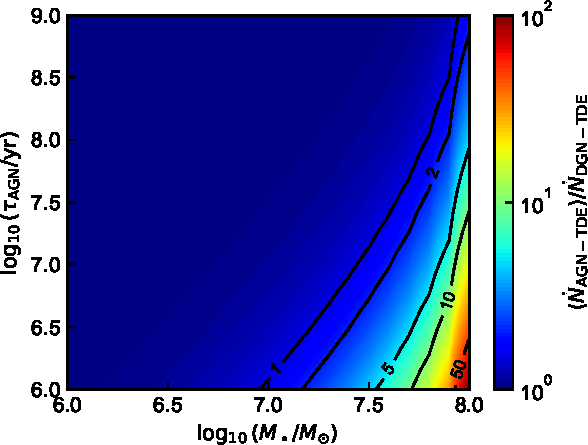
Tidal disruption events from three-body scatterings and eccentricity pumping

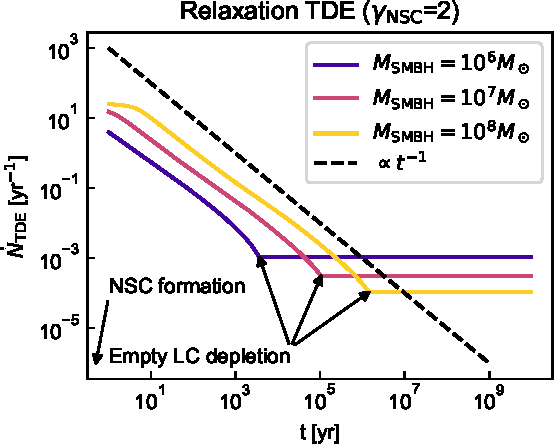
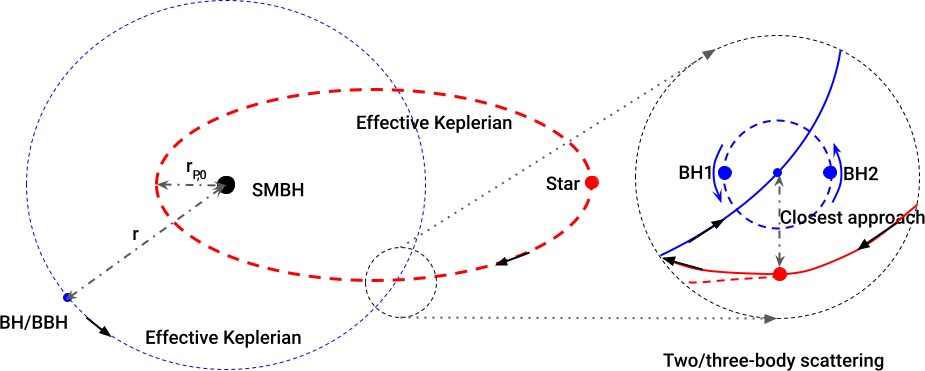
Few-body scattering experiments with SpaceHub compute how often stars are tidally disrupted by the central supermassive black hole, or by embedded stellar-mass black holes, through three-body encounters in AGN disks. AGN TDEs peak early in the AGN's life while micro-TDEs persist throughout — giving future Rubin and Roman surveys a way to constrain the stars and compact objects embedded in AGN disks.
Stellar/BH population in AGN discs: direct binary formation from capture objects
2024 · MNRASLead author

Stellar/BH population in AGN discs: direct binary formation from capture objects

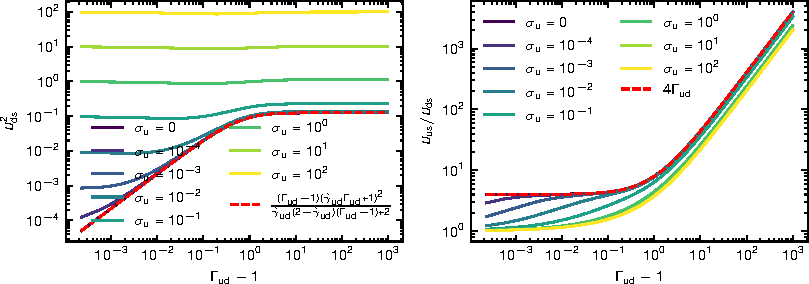
I develop an analytic and numerical theory for how stars and black holes from the surrounding nuclear cluster are captured into an AGN accretion disk, uncovering a new conserved quantity for the capture process. The captured population follows a universal profile (dN/dr ∝ r^−1/4) nearly independent of the disk model and is dense enough that binaries can form directly upon capture — possibly removing the need for migration traps to explain the AGN black-hole-merger channel.

Conditions for changing-look AGNs from accretion disk-induced tidal disruption events
2024 · arXivLead author

Conditions for changing-look AGNs from accretion disk-induced tidal disruption events

By comparing the predicted rate of disk-induced TDEs to the observed changing-look AGN population, this Letter shows that if AGN-TDEs drive these transitions, their host black holes must be near-maximally spinning, with dense inner disks, ~10–100 Myr lifetimes, and a top-light nuclear-cluster mass function. Changing-look AGN thus become a probe of black-hole spin and disk structure.

Changing-look AGN behaviour induced by disk-captured tidal disruption events
2024 · ApJ LettersLead author

Changing-look AGN behaviour induced by disk-captured tidal disruption events

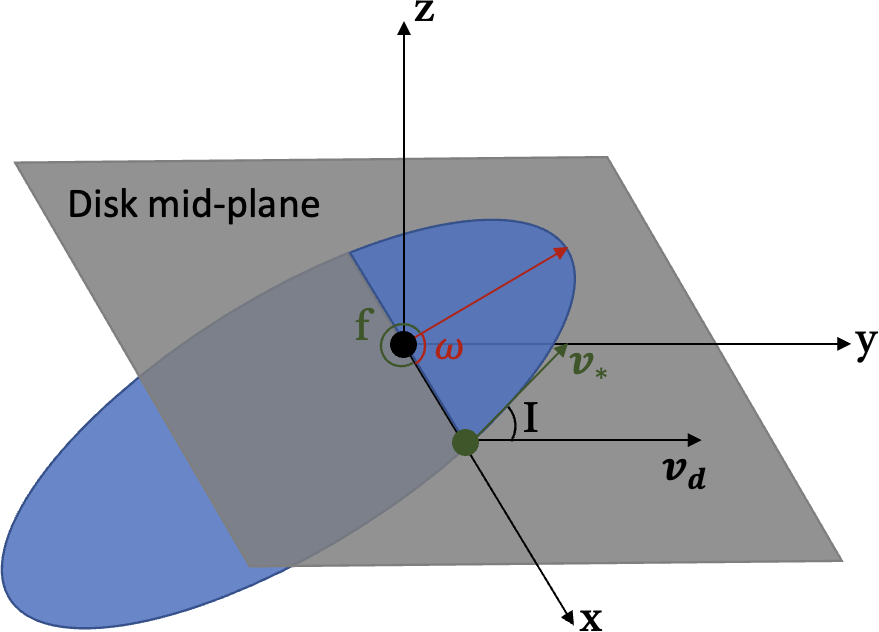
This Letter proposes that the surprising frequency of changing-look AGN can be explained by TDEs produced when the accretion disk captures retrograde stars from the nuclear cluster. The disk-capture channel boosts the TDE rate by orders of magnitude during the AGN phase, naturally accounting for the rapid accretion-state transitions that are observed.

Effective two-body scatterings around a massive object
2023 · MNRASLead author

Effective two-body scatterings around a massive object

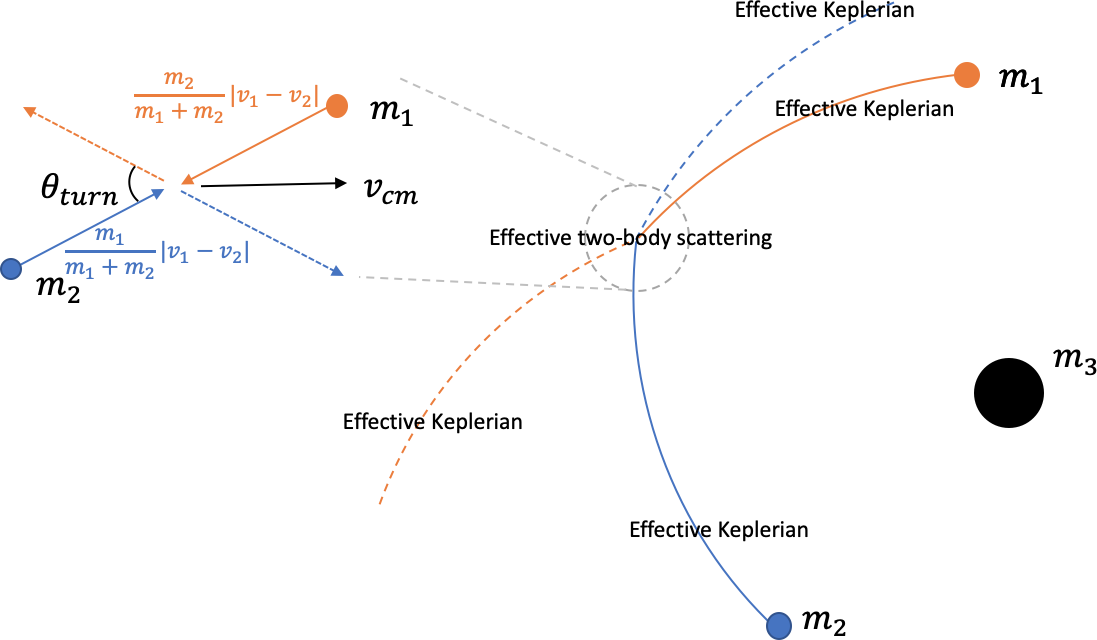
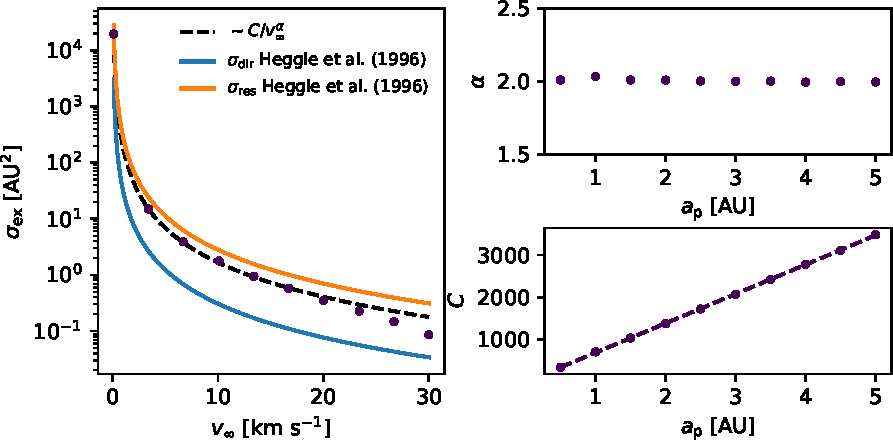
I derive the conditions under which a scattering between two small bodies near a much more massive object can be treated as an isolated two-body problem, and give a simple analytic solution validated against N-body experiments. Applied to star–black-hole encounters in AGN disks and to planet–planet scattering, it yields analytic cross-sections and large savings in computation.

The emergence of diffused gamma-ray burst afterglows from the discs of active galactic nuclei
2022 · MNRASLead author

The emergence of diffused gamma-ray burst afterglows from the discs of active galactic nuclei

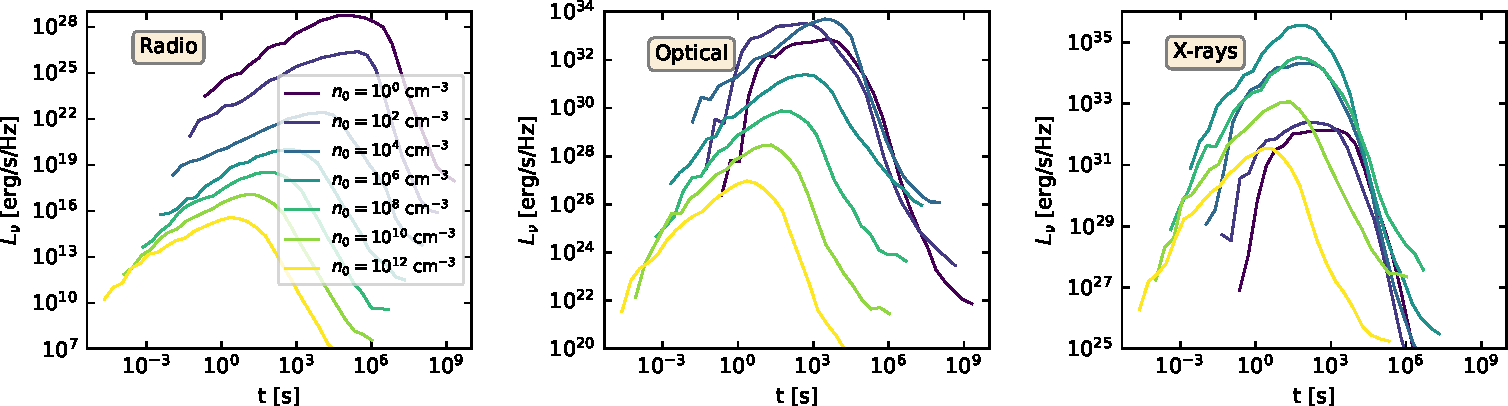
I compute how gamma-ray burst afterglows are altered when the burst goes off inside the dense, optically thick disk of an AGN. Synchrotron self-absorption suppresses the radio-to-X-ray emission while photon diffusion delays and isotropizes the signal — turning a beamed, fast transient into a slow, dim, high-frequency source that appears as broadband-correlated AGN variability encoding the disk's structure.

Close encounters of stars with stellar-mass black hole binaries
2022 · MNRASCo-author

Close encounters of stars with stellar-mass black hole binaries

Using 3D hydrodynamics, this study follows close encounters between stars and stellar-mass binary black holes in the gravitational-wave regime, tracking both disruptions and pure scatterings. A single event can change the binary separation by up to ~20%, alter its eccentricity and effective spin, and modulate strongly super-Eddington accretion on the orbital period — a possible signature of binary-driven TDEs.

Symmetry Breaking in Dynamical Encounters in the Disks of Active Galactic Nuclei
2021 · ApJ LettersLead author

Symmetry Breaking in Dynamical Encounters in the Disks of Active Galactic Nuclei

Using SpaceHub, I show that the broken symmetry of dynamical encounters in AGN disks makes prograde and retrograde binary-black-hole mergers harden differently, producing an asymmetric distribution of effective spin (χeff). The channel predicts that negative-χeff mergers — a fingerprint of the AGN channel — are most likely for massive binaries, a testable prediction for LIGO/Virgo.

Partial tidal disruption events by stellar mass black holes: Gravitational
2021 · MNRASLead author

Partial tidal disruption events by stellar mass black holes: Gravitational

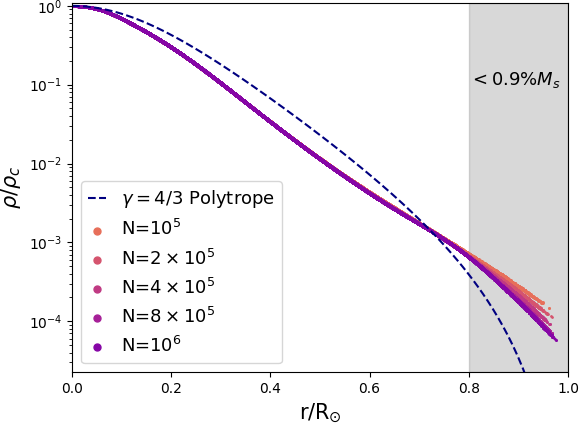
Using SPH simulations that include radiation pressure, I study the partial tidal disruption of stars by stellar-mass black holes in dense clusters, and introduce a general, approximation-free way to compute the fallback rate. For low-mass black holes the fallback slope depends strongly on the black-hole mass, and self-gravity fragments the debris stream into clumps, producing an abrupt, non-power-law rise that helps identify these transients.

Massive Black Holes & Gravitational-Wave Sources8 papers

Massive black holes shape galactic nuclei, and dynamical interactions in dense systems are a key channel for assembling the compact-object binaries that gravitational-wave detectors observe. Using high-precision N-body and scattering simulations, I study how single and binary supermassive black holes drive stellar mergers, tidal disruptions, and hypervelocity ejections, and predict the rates, eccentricities, spins, and sky distribution of dynamically-formed black-hole and neutron-star mergers — including evidence that our own Galactic-centre black hole grew through a past merger.

Evidence of a past merger of the Galactic Centre black hole
2024 · Nature AstronomyLead author

Evidence of a past merger of the Galactic Centre black hole

Sgr A*, the Milky Way's central black hole, is inferred to spin rapidly with its spin axis strongly misaligned from the Galactic plane. I show that a past 4:1 black-hole merger — echoing the Milky Way–Gaia-Enceladus galaxy merger — reproduces the measured spin, offering observational support for hierarchical SMBH growth and a promising target for 2030s space-borne gravitational-wave detectors.

The cosmological distribution of compact object mergers from dynamical interactions
2019 · MNRASLead author

The cosmological distribution of compact object mergers from dynamical interactions

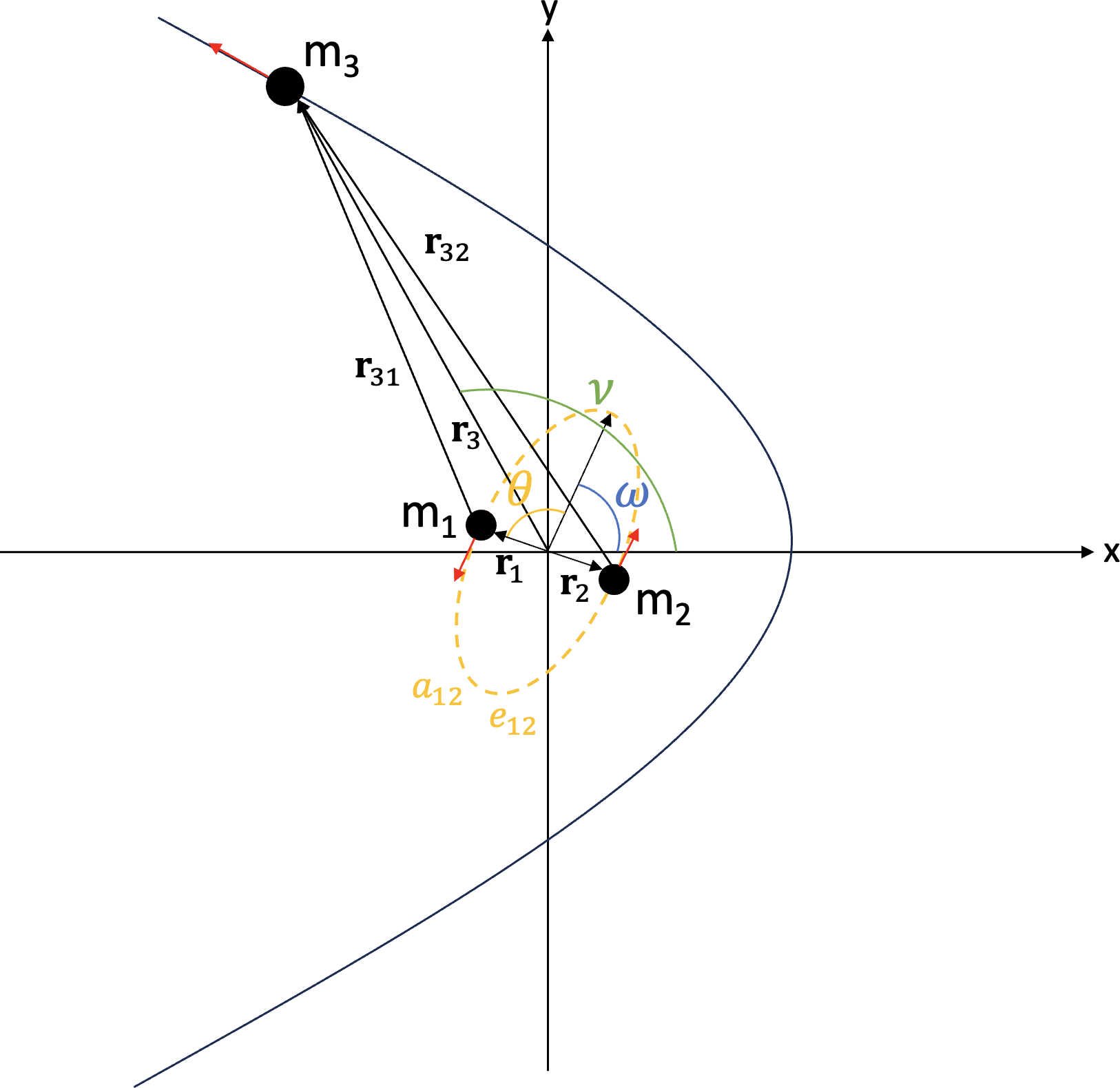
Combining high-precision scattering experiments with the Millennium-II cosmological simulation, I predict the cosmic merger rates of white-dwarf, neutron-star, and black-hole binaries driven by encounters with supermassive black-hole binaries. Some merge far outside their host galaxy as ejected hypervelocity binaries — “off-centre” mergers whose weak afterglows would betray a nearby, high-mass-ratio black-hole binary from a recent galaxy merger.

Hypervelocity binaries from close encounters with a SMBH–IMBH binary
2019 · MNRASLead author

Hypervelocity binaries from close encounters with a SMBH–IMBH binary

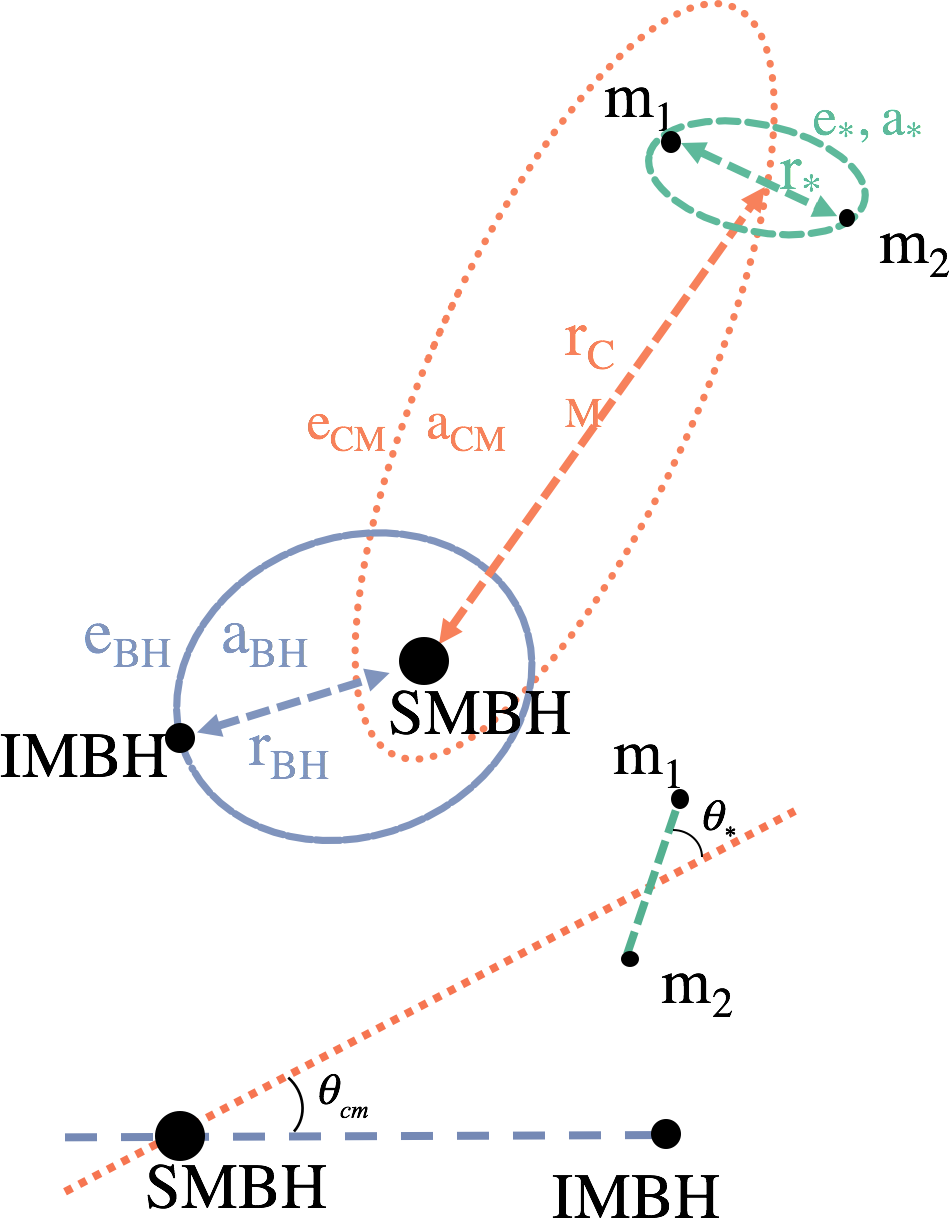
High-precision N-body scattering experiments show that close encounters between stellar binaries and an SMBH–IMBH binary in the Galactic Center can eject intact “hypervelocity binaries”, most efficiently on prograde, coplanar orbits. Because the ejected binaries are tight and eccentric, their trajectories could pin down the orbital plane of a putative intermediate-mass black hole.

Binary Mergers near a Supermassive Black Hole: Relativistic Effects in Triples
2019 · ApJ LettersCo-author

Binary Mergers near a Supermassive Black Hole: Relativistic Effects in Triples

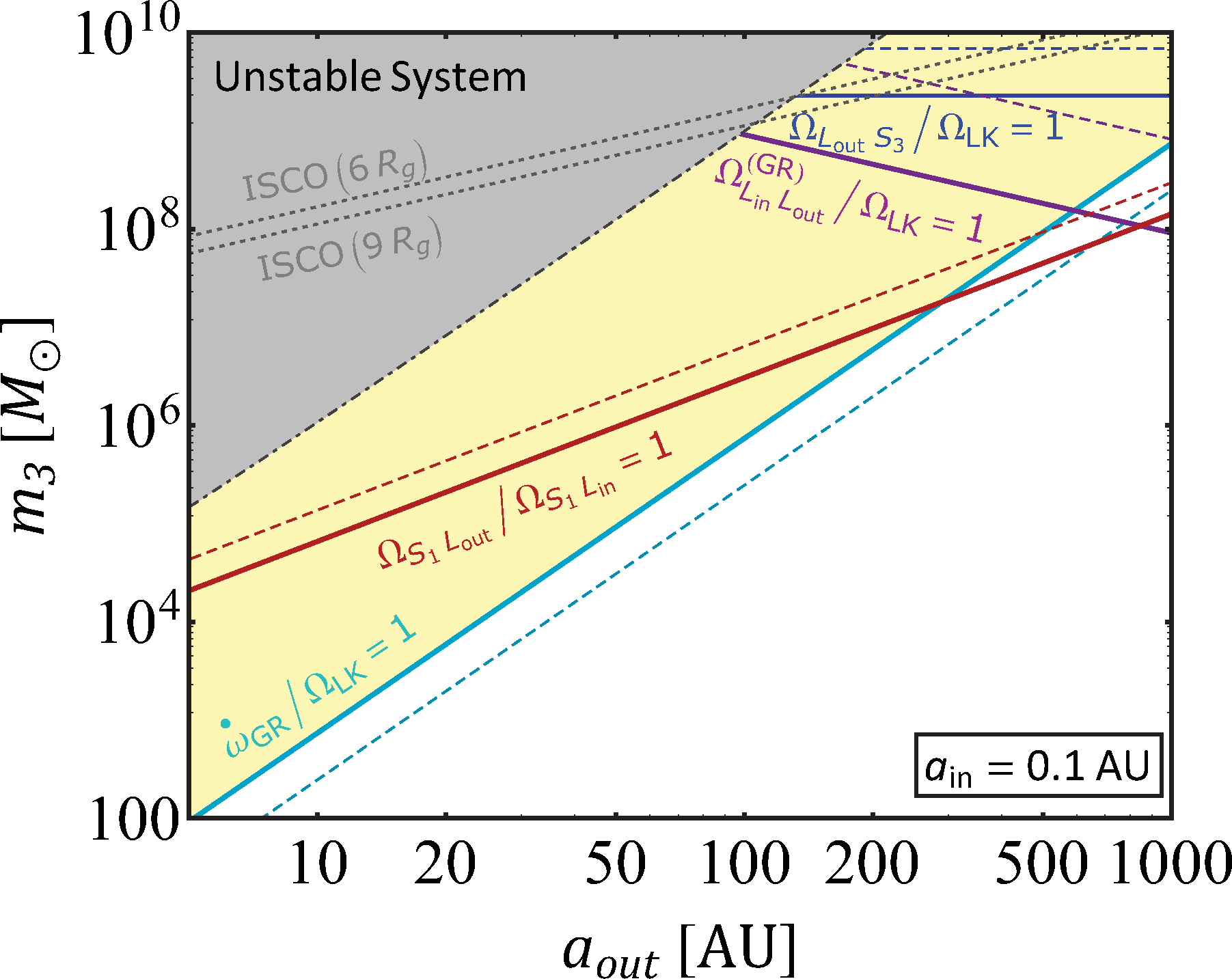
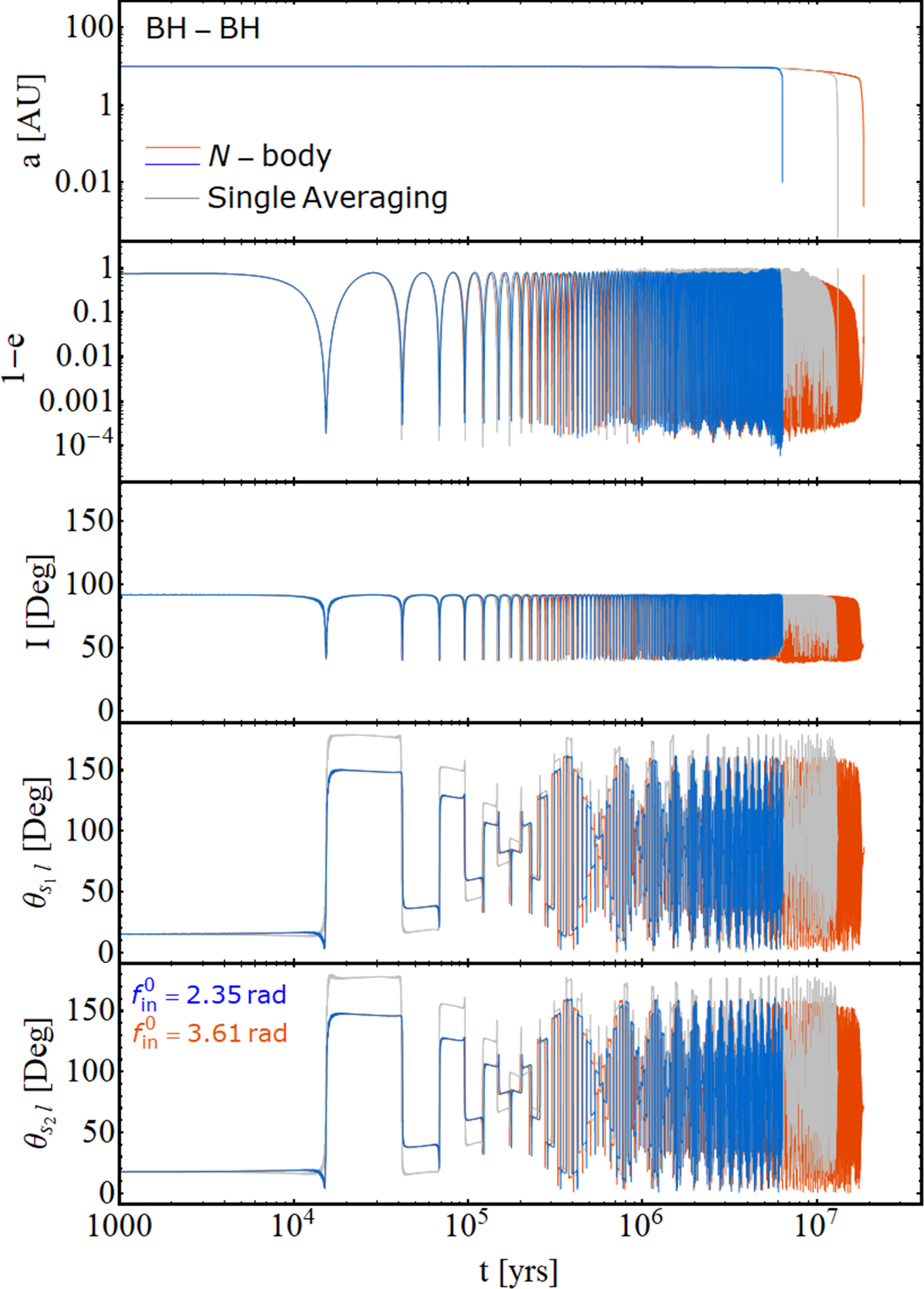
This Letter studies how a spinning supermassive black hole affects a merging black-hole binary on an inclined outer orbit. General-relativistic precession driven by the central black hole widens the inclination window for Lidov–Kozai-induced mergers and randomizes the binary's spin orientations — a distinct “GR-enhanced” merger channel.

Black Hole and Neutron Star Binary Mergers in Triple Systems. II. Merger Eccentricity
2019 · ApJCo-author

Black Hole and Neutron Star Binary Mergers in Triple Systems. II. Merger Eccentricity

Using secular and N-body integrations with post-Newtonian effects, I predict the eccentricity and spin–orbit misalignment distributions of black-hole and neutron-star binaries merging via Lidov–Kozai oscillations in triples. A few percent retain significant eccentricity in the LIGO/Virgo band (more in the LISA band), with misalignment correlated with eccentricity — diagnostics of the triple channel.

Constraining the Black Hole Initial Mass Function with LIGO/Virgo Observations
2019 · ApJ LettersCo-author

Constraining the Black Hole Initial Mass Function with LIGO/Virgo Observations

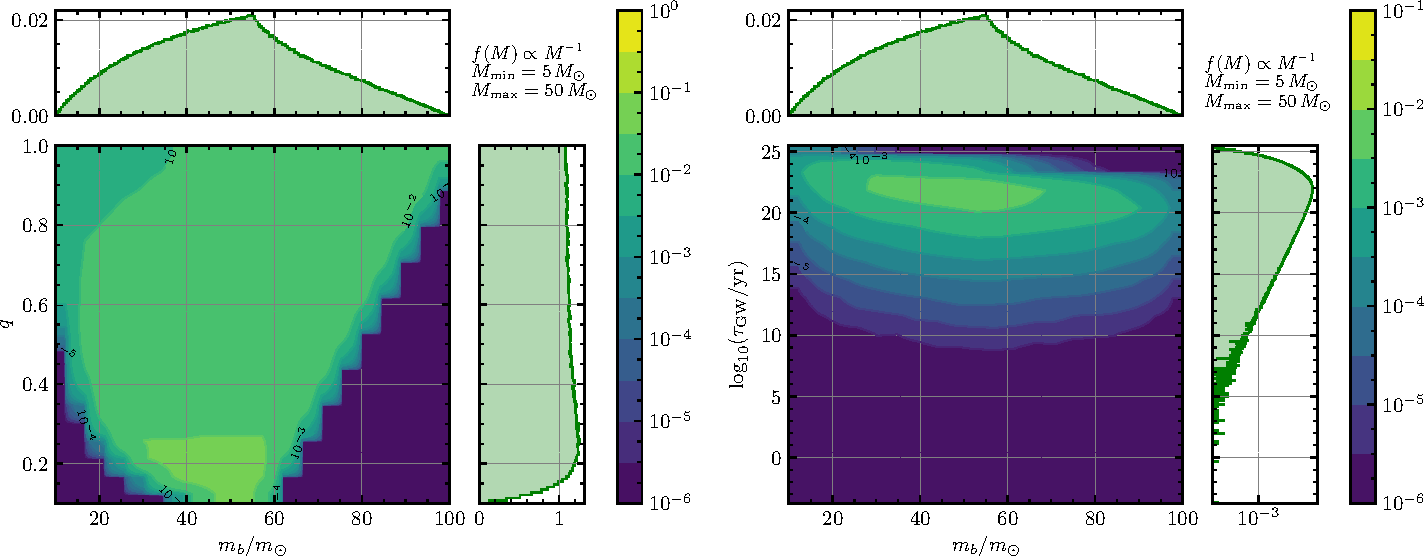
High-resolution N-body simulations of black-hole clusters are compared with the O1/O2 LIGO/Virgo population through a likelihood analysis. The data favour an initial black-hole mass spectrum ∝ M^−2.35 with an upper cutoff near 50 M☉ and a merger rate that rises with redshift, supporting a dynamical origin for at least part of the detected population.

The fate of close encounters between binary stars and binary supermassive black holes
2018 · MNRASLead author

The fate of close encounters between binary stars and binary supermassive black holes

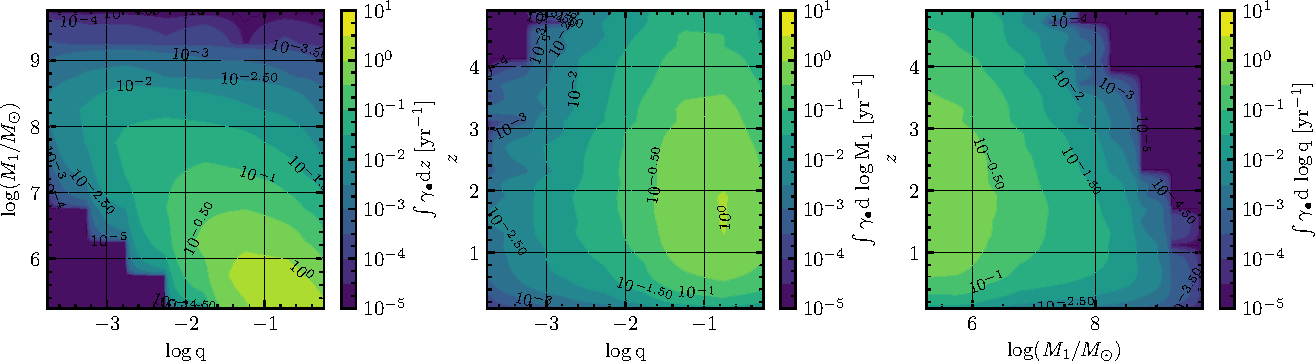
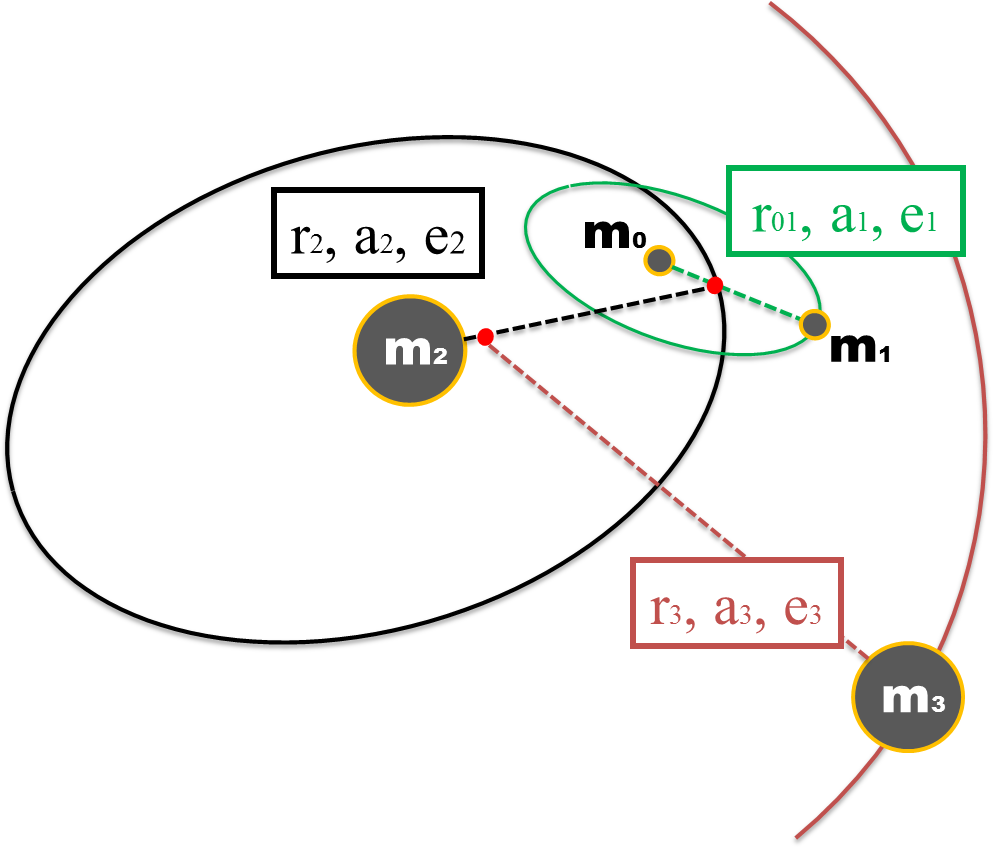
N-body simulations follow stellar binaries orbiting a primary supermassive black hole while a secondary black hole orbits the whole system. The secondary's mass ratio controls the rates of tidal disruptions, hypervelocity stars, and stellar mergers — so the observed rates of these events can diagnose the presence and mass ratio of a binary supermassive black hole in a galactic nucleus.

Modified evolution of stellar binaries from supermassive black hole binaries
2017 · MNRASCo-author

Modified evolution of stellar binaries from supermassive black hole binaries

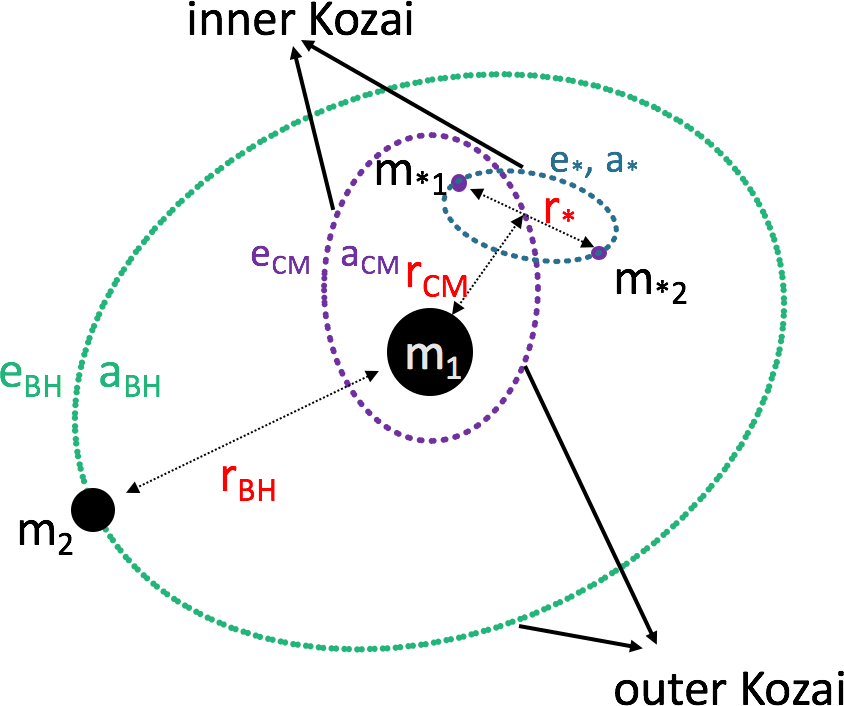
This early work treats a stellar binary in the Galactic Center perturbed by a second, distant supermassive black hole as a hierarchical four-body system. It derives analytic criteria for mergers and tidal disruptions, finding that Lidov–Kozai oscillations drive ~70% of tight binaries to merge and that an inclined outer black hole boosts TDEs to ~10% — a burst of exotic events flagging a black-hole binary.

Planet Dynamics in Star Clusters6 papers

Most planetary systems are born in clustered environments where encounters with passing stars are common. With high-precision few-body simulations I study how flybys reshape planetary architectures — forming hot Jupiters, ejecting free-floating and binary planets, and swapping giant planets between stars — connecting cluster dynamics to the diversity of observed exoplanets.

Evolution of extremely soft binaries in dense star clusters: on the Jupiter-mass binary objects
2025 · ApJLead author

Evolution of extremely soft binaries in dense star clusters: on the Jupiter-mass binary objects

Extending the Hut & Bahcall formalism to extreme mass ratios, I derive how very weakly bound (“soft”) binary planets and brown dwarfs are ionized by encounters in star clusters, predicting a universal semi-major-axis power law. Applied to the candidate Jupiter-mass binary objects in the Trapezium, the statistics favour a continuously-formed, ejection-origin population over in-situ formation.

Free-floating binary planets from ejections during close stellar encounters
2024 · Nature AstronomyLead author

Free-floating binary planets from ejections during close stellar encounters

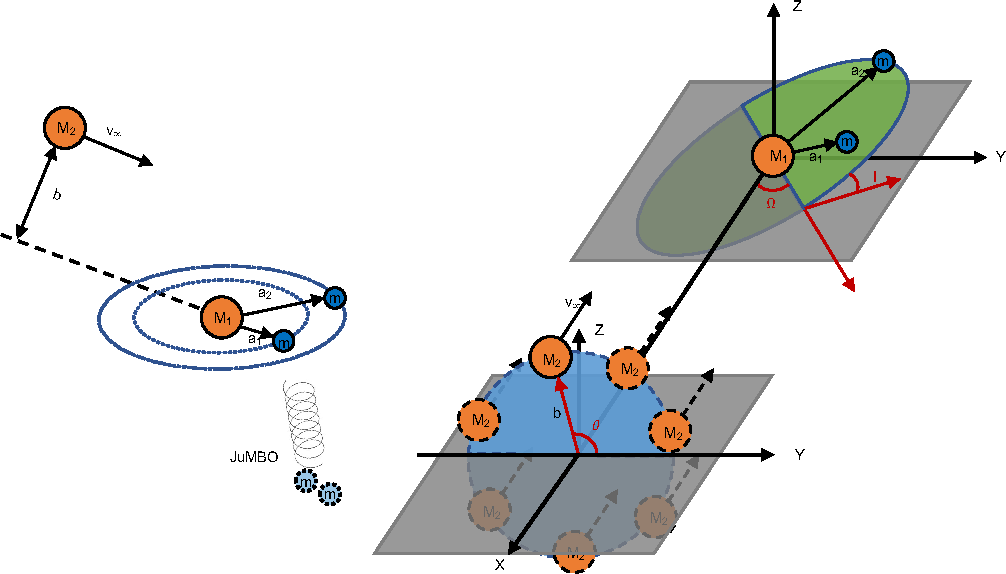
Few-body simulations show that JWST's puzzling Jupiter-Mass Binary Objects can form when a passing star ejects two nearly-aligned giant planets from a planetary system. The ejected pairs are wide and super-thermally eccentric — a signature distinguishing them from primordially-formed binaries and a probe of giant-planet formation across environments.

Hot Jupiter formation in dense clusters: secular chaos in multiplanetary systems
2022 · MNRASLead author

Hot Jupiter formation in dense clusters: secular chaos in multiplanetary systems

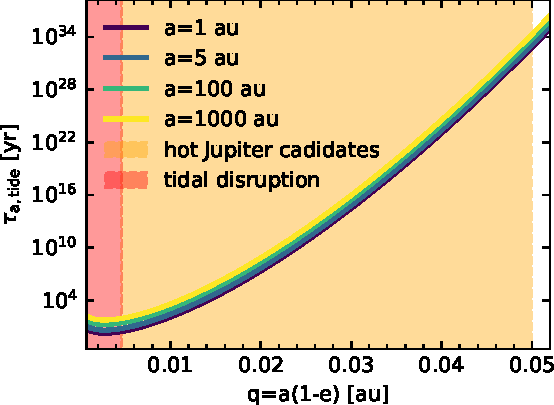
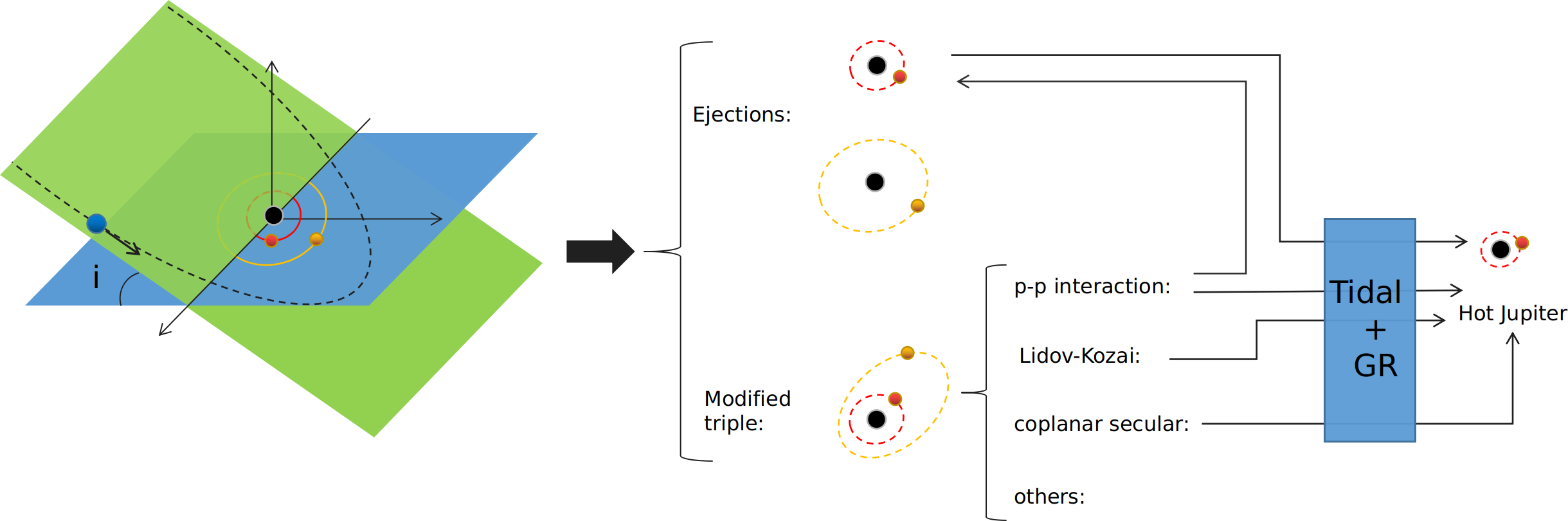
Using SpaceHub, I show that a single stellar flyby in a cluster can trigger secular chaos in a multi-planet system, driving high-eccentricity migration that forms hot Jupiters accompanied by distant massive companions. This flyby-induced channel dominates in low-density clusters and contributes a significant fraction of cluster hot Jupiters.

Hot Jupiter and Ultra-cold Saturn Formation in Dense Star Clusters
2020 · ApJLead author

Hot Jupiter and Ultra-cold Saturn Formation in Dense Star Clusters

Few-body simulations of stellar flybys in dense clusters show that close encounters activate Lidov–Kozai and planet–planet scattering, boosting hot-Jupiter formation. A robust prediction is that many of these hot Jupiters are accompanied by “ultra-cold Saturns” flung out to thousands of AU.

Planetary architectures in interacting stellar environments
2020 · MNRASLead author

Planetary architectures in interacting stellar environments

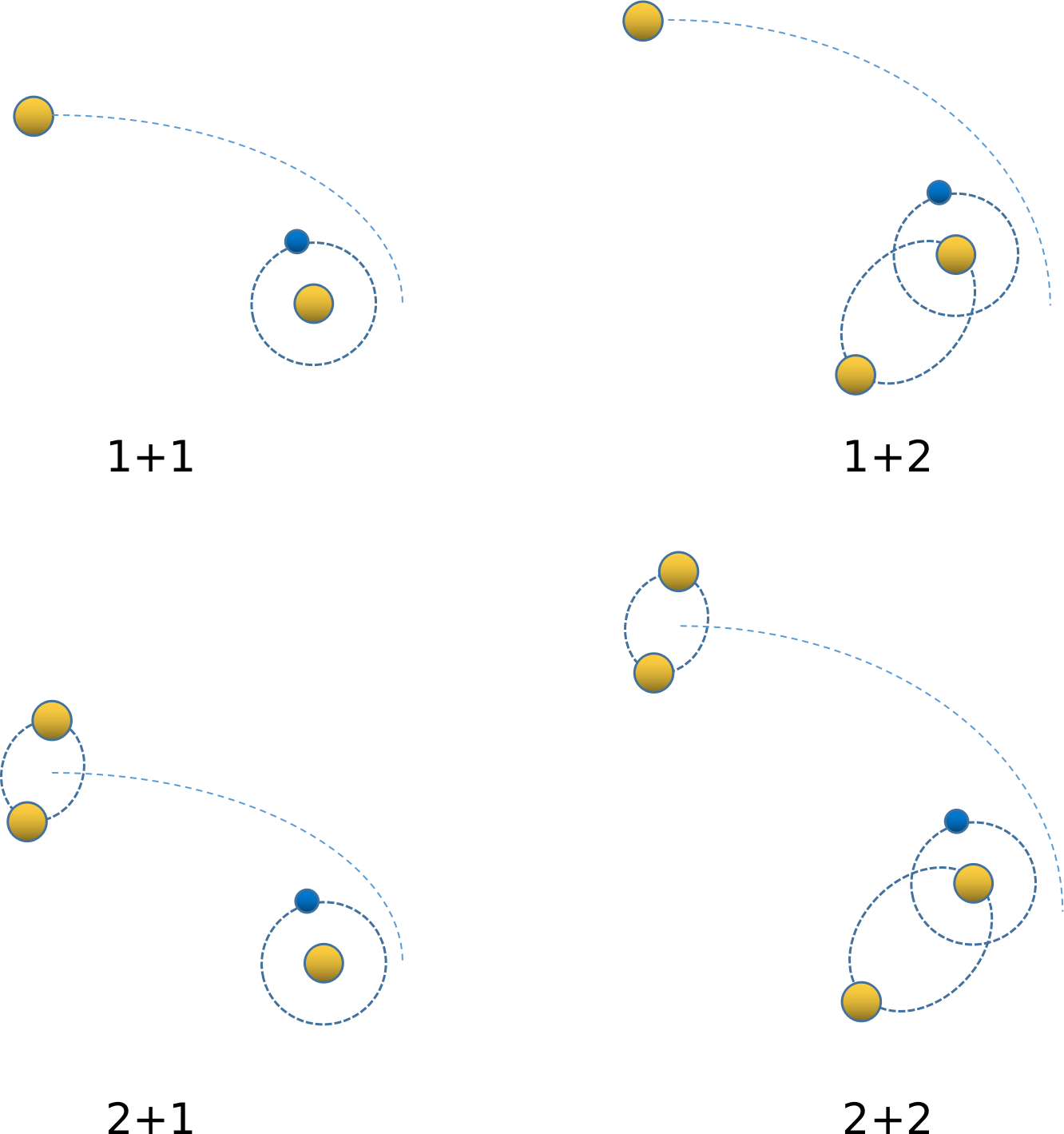
High-resolution N-body simulations quantify how flybys by stars and binaries reshape planetary systems — ejecting, transferring, or colliding planets — as a function of cluster density and velocity dispersion. Binary interlopers greatly increase ejection and collision cross-sections, so free-floating planets should be common in high-binary-fraction environments.

Giant Planet Swaps during Close Stellar Encounters
2020 · ApJ LettersLead author

Giant Planet Swaps during Close Stellar Encounters

This Letter proposes that giant planets orbiting very-low-mass stars (like GJ 3512b) can form not in situ but by being captured during a flyby — a “planet swap” from a Sun-like birth star to a passing low-mass star. N-body cross-sections show such swaps produce tight, eccentric orbits and should already be hiding in the exoplanet census of cluster-born stars.

Gamma-Ray Bursts, Transients & Multi-Messenger Counterparts8 papers

The deaths of massive stars and the mergers of compact objects launch relativistic jets and engine-powered transients. I model their central engines (including magnetars) and multiwavelength afterglows, and bring that modelling to observational teams chasing the universe's fastest transients — gamma-ray bursts, fast X-ray transients, fast radio bursts, dirty fireballs, and engine-driven supernovae — connecting theory to real data from facilities such as the Einstein Probe, FAST, Chandra, and the VLA.

A 14-year-old mystery: the peculiar case of the engine-driven SN 2012ap
2026 · arXiv (submitted to ApJ)Collaboration

A 14-year-old mystery: the peculiar case of the engine-driven SN 2012ap

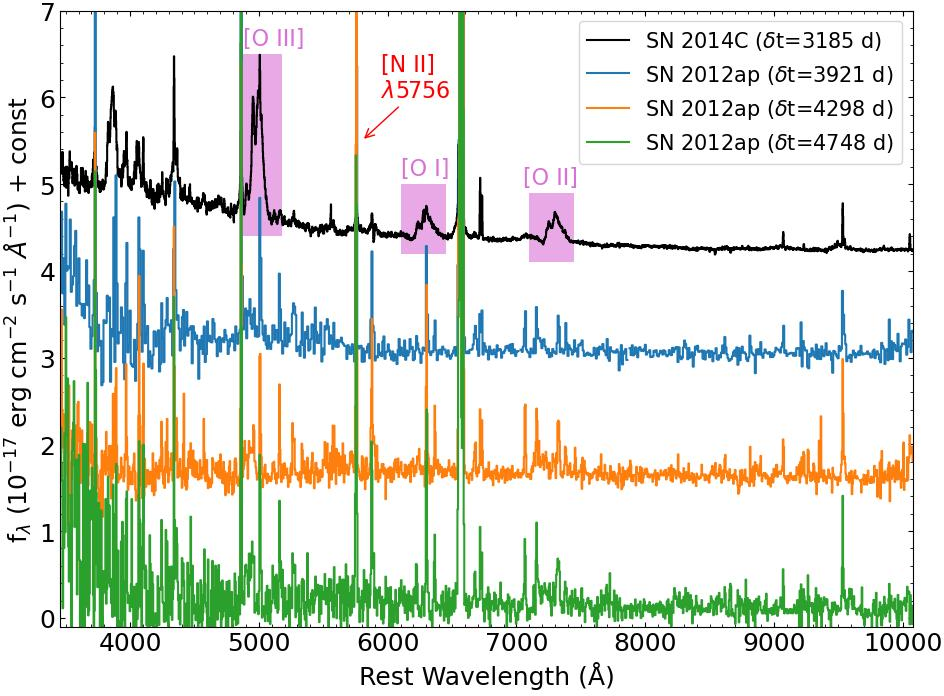
Late-time optical, X-ray, and radio observations probe the engine-driven Type Ic-BL supernova SN 2012ap, whose radio re-brightening could signal either a density enhancement from changing progenitor mass loss or an off-axis relativistic jet. Both scenarios are found viable, with upcoming VLBI observations needed to decide whether SN 2012ap is truly GRB-like. (Collaboration; I contributed afterglow/jet modelling.)

An energetic dirty fireball detected in soft X-rays
2026 · arXivLead author

An energetic dirty fireball detected in soft X-rays

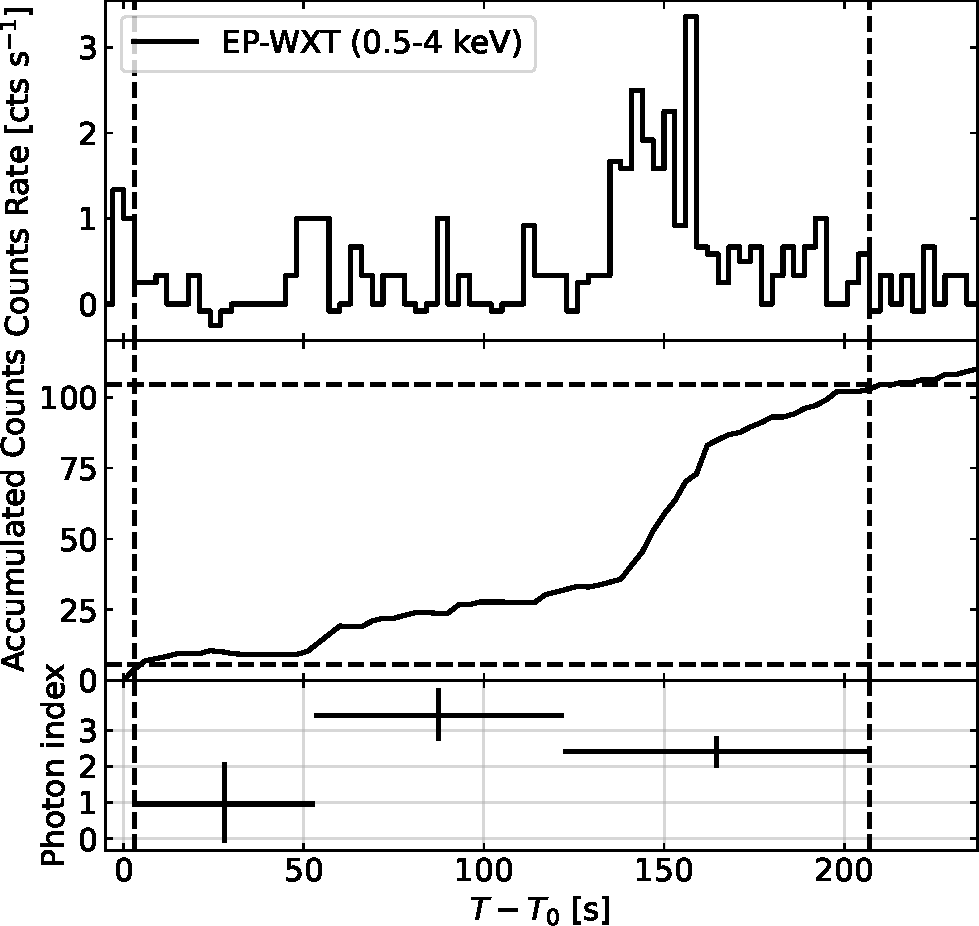
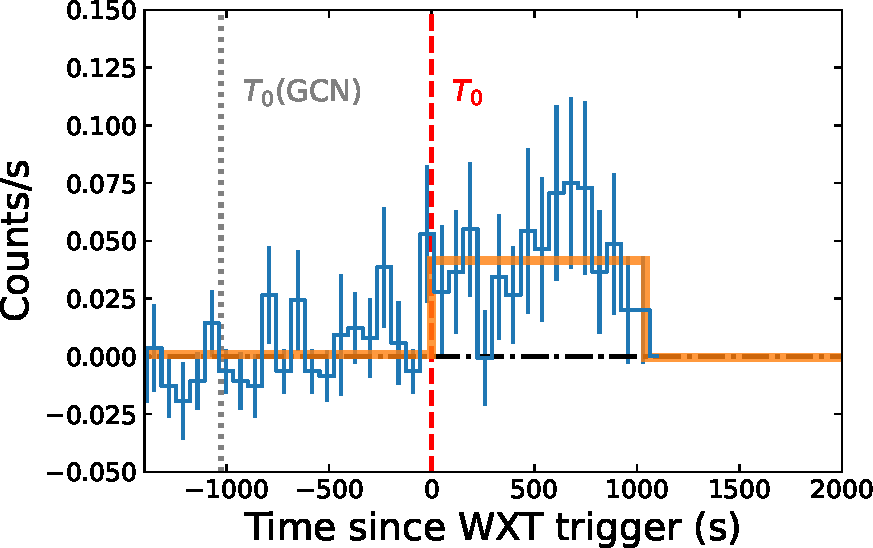
This paper reports EP241113a, an Einstein Probe fast X-ray transient with GRB-like energy but a much lower spectral peak. Modelling of its early afterglow implies a relativistic jet with a low Lorentz factor (Γ ~ 20) seen near on-axis — the long-sought prototype of a “dirty fireball”, a baryon-loaded cousin of classical gamma-ray bursts. (Collaboration.)

2026 · ApJCollaboration

Signature of a magnetar central engine from the multiband afterglow of a GRB

Multiband afterglow modelling of a gamma-ray burst reveals the signature of a magnetar central engine powering its emission, linking the burst's energetics and light-curve behaviour to sustained energy injection from a newborn magnetar. (Collaboration; connects to my magnetar-engine modelling.)

X-ray Emission Signatures of Neutron Star Mergers
2025 · arXivCo-author

X-ray Emission Signatures of Neutron Star Mergers

I argue that X-ray emission is a powerful, complementary probe of neutron-star mergers alongside gamma-rays and kilonovae, and provide a general method to compute prompt and afterglow X-ray light curves for structured jets viewed from any angle. This enables geometric constraints and predicted peak times and fluxes to guide rapid follow-up of future gravitational-wave events.

An extremely soft and weak fast X-ray transient associated with a luminous supernova
2025 · arXivCollaboration

An extremely soft and weak fast X-ray transient associated with a luminous supernova

This work reports EP250108a, an Einstein Probe soft X-ray transient at z = 0.176 associated with the luminous, possibly magnetar-powered broad-lined Type Ic supernova SN 2025kg. It extends the gamma-ray-burst/X-ray-flash family to unprecedentedly soft and weak regimes, with light curves favouring a mildly relativistic outflow from a massive star's death. (Collaboration.)

Multiwavelength Observations of the Apparently Nonrepeating FRB 20250316A
2025 · ApJCollaboration

Multiwavelength Observations of the Apparently Nonrepeating FRB 20250316A

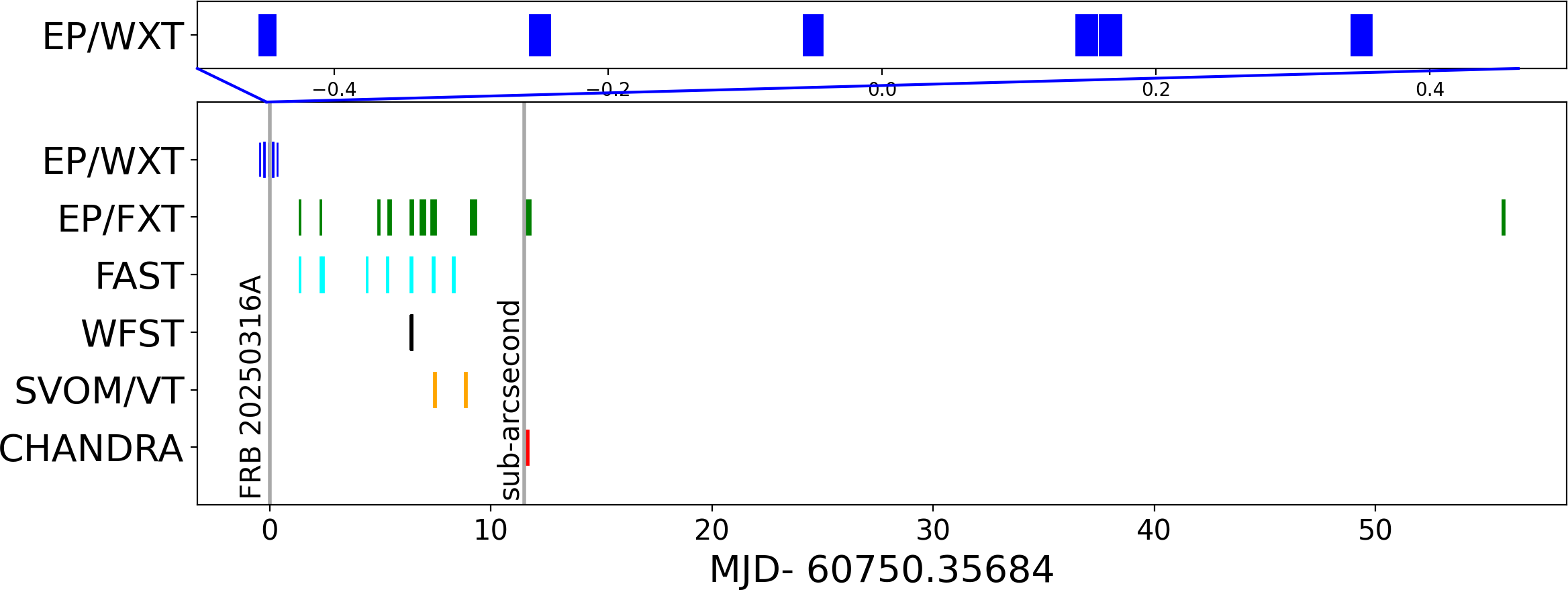
A multiwavelength campaign (FAST, Einstein Probe, Chandra, WFST, SVOM) follows the nearby fast radio burst FRB 20250316A. The lack of repeat bursts and a deep X-ray limit — excluding ultraluminous X-ray sources as counterparts — point to a likely one-off event and underscore the need for arcsecond localization to find FRB counterparts. (Collaboration.)

Anisotropic energy injection from magnetar central engines in short GRBs
2024 · MNRASLead author

Anisotropic energy injection from magnetar central engines in short GRBs

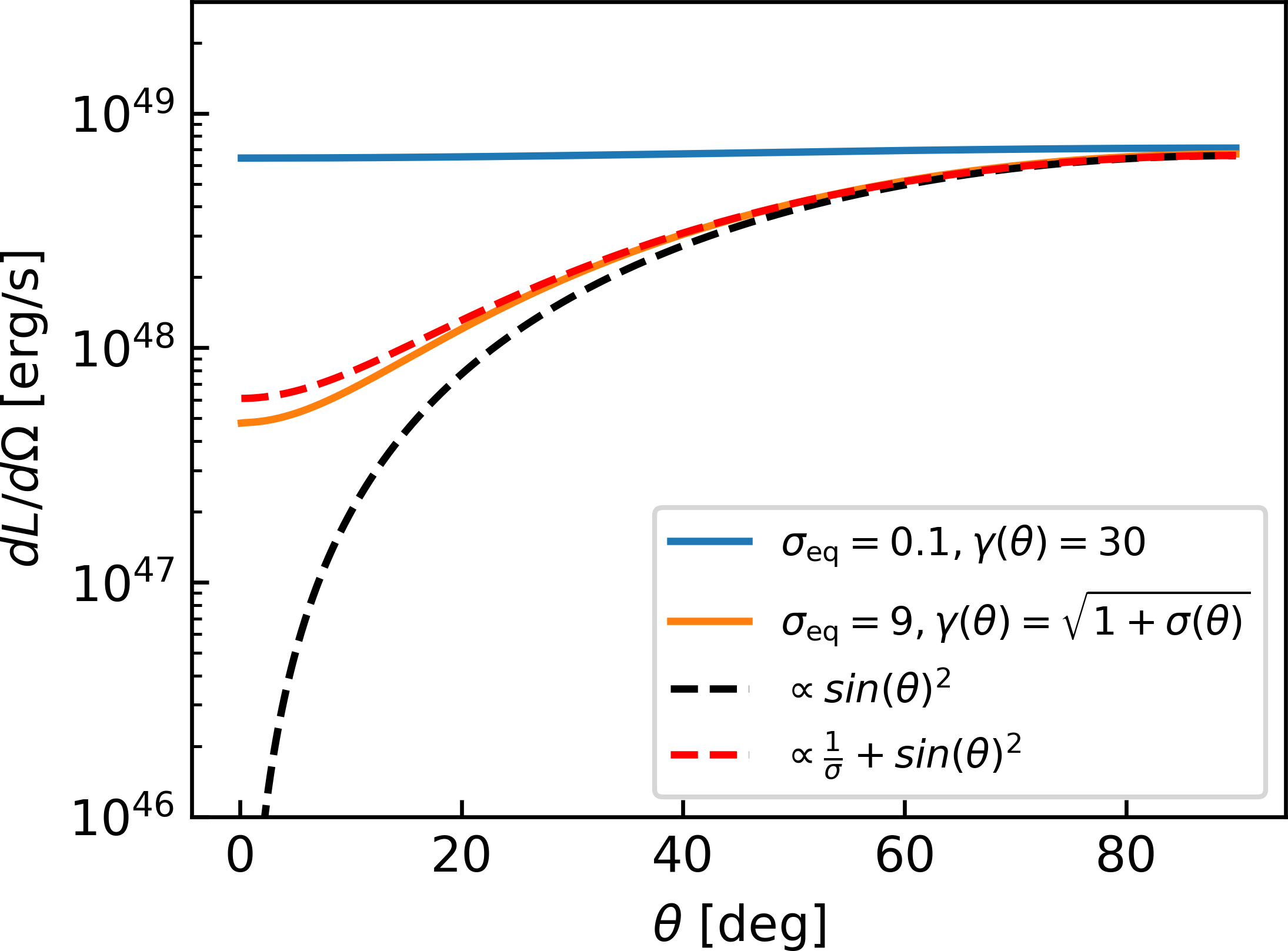
Special-relativistic MHD simulations show that energy injected by a magnetar central engine into the surrounding ejecta is not isotropic, as usually assumed, but collimated toward the jet axis within the magnetar-wind nebula. The effective energy per solid angle can drop by up to a factor of ten, so engine-fed kilonovae should appear significantly fainter than previously predicted.

Host galaxies and electromagnetic counterparts to binary neutron star mergers
2022 · MNRASCo-author

Host galaxies and electromagnetic counterparts to binary neutron star mergers

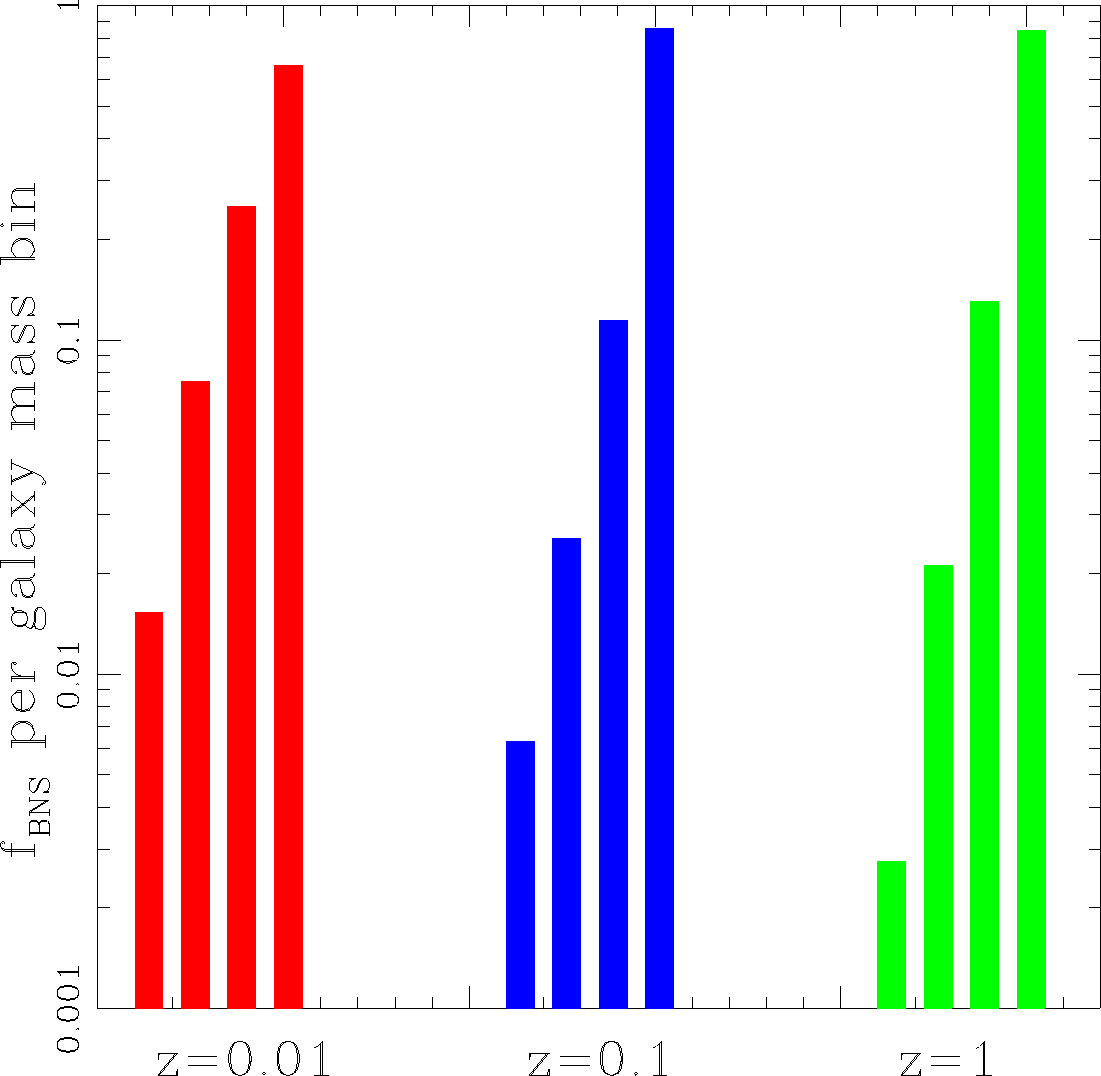
This study combines binary-population synthesis with the IllustrisTNG50 simulation to seed neutron-star binaries in realistic host galaxies and compute their jet afterglows at the merger sites. It predicts that ~70–80% of nearby binary-neutron-star mergers are detectable in gamma-rays but only ~0.3–0.7% in afterglow, with detectability biased by viewing angle and host-galaxy mass.

Open-Source Software & Numerical Methods2 papers

Much of my research is enabled by open-source software I develop and release. These tools — a few-body gravity integrator and a gamma-ray-burst afterglow framework — emphasise accuracy and performance so the community can reproduce and build on my results.

VegasAfterglow: A high-performance framework for gamma-ray burst afterglows
2026 · JHEApLead author

VegasAfterglow: A high-performance framework for gamma-ray burst afterglows

VegasAfterglow is a high-performance C++/Python framework I built for modelling gamma-ray-burst afterglows. It self-consistently solves forward and reverse shock dynamics and computes synchrotron (with self-absorption) and inverse-Compton (with Klein–Nishina) radiation for arbitrary density profiles, jet structures, and viewing angles — fast enough for full MCMC inference.

SpaceHub: A high-performance gravity integration toolkit for few-body problems
2021 · MNRASLead author

SpaceHub: A high-performance gravity integration toolkit for few-body problems

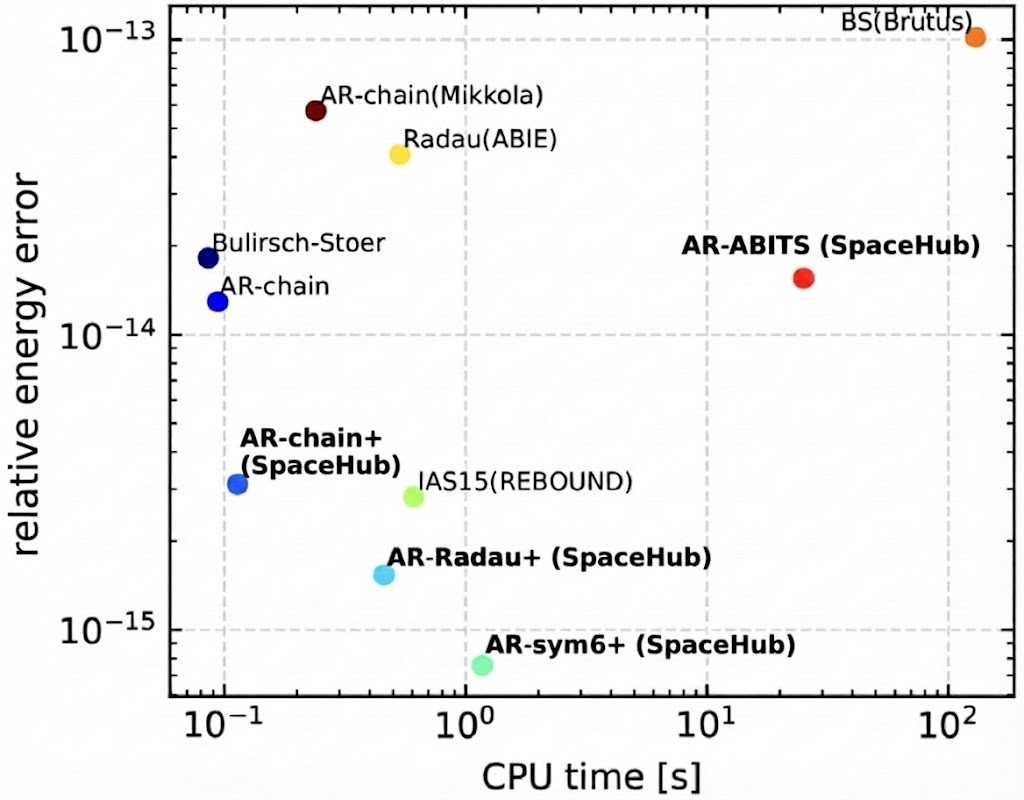
SpaceHub is an open-source few-body gravitational-dynamics toolkit I developed, introducing the AR-Radau, AR-Sym6, AR-ABITS, and AR-chain⁺ algorithms. With algorithmic regularization, chained coordinates, and active round-off-error compensation, it outperforms other high-precision codes for systems with extreme mass ratios, extreme eccentricities, and very close encounters — from interacting black holes to planetary systems.